The Essayist
ArticleMeaning in an Indifferent Expanding Cosmos.
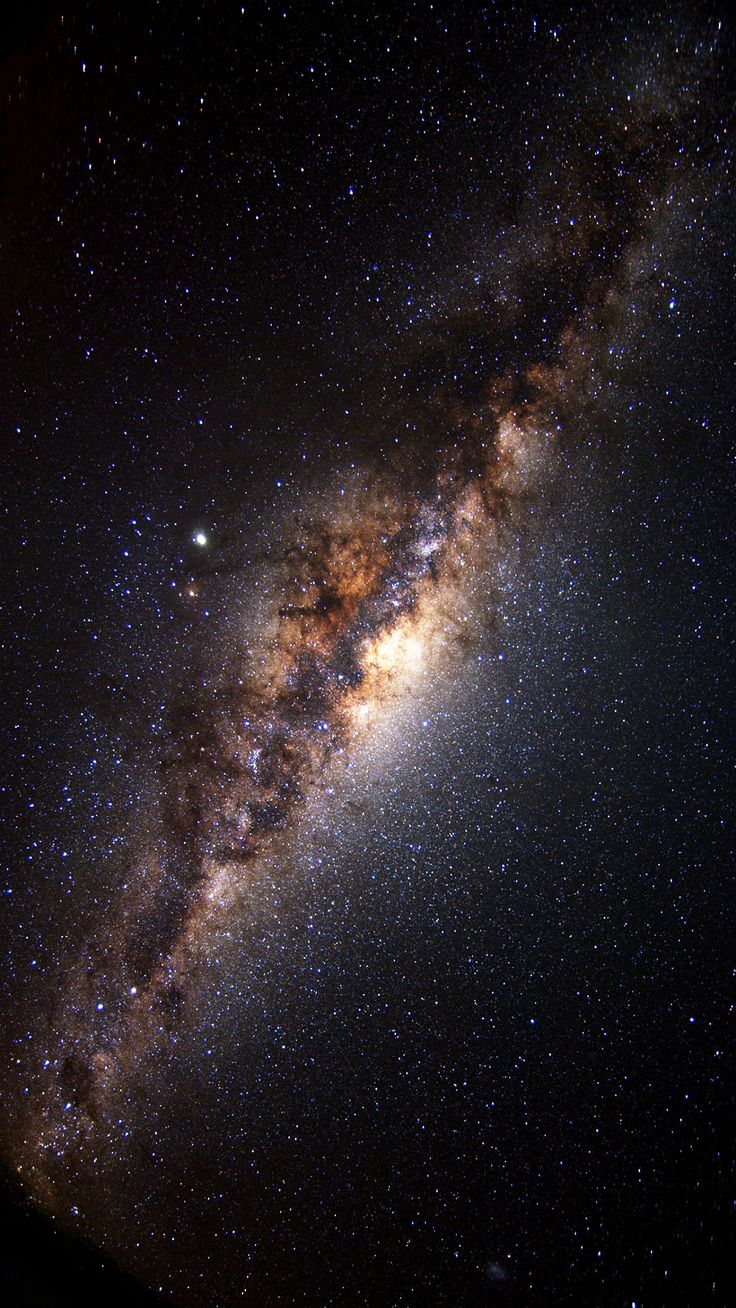
The universe is large, cold, and not made for us. That may be the best reason to live on purpose.
A Universe That Will Not Sit Still.
In 1929, Edwin Hubble showed that the universe was not static. The galaxies around us were moving apart. Space itself was getting bigger. For almost seventy years that was strange enough. Then, in 1998, Brian Schmidt, Adam Riess and Saul Perlmutter found something stranger still. The expansion was speeding up, pushed by what we now call dark energy. They would share the 2011 Nobel Prize in Physics for it. So we live with two facts at once. The universe is immensely large, and it is expanding faster as time passes. You can know this in an afternoon. It takes longer to absorb it.
Counting What We Cannot Picture.
Ten years ago textbooks often put the number of galaxies in the observable universe near 200 billion. Newer deep-field work, notably the counts published by Christopher Conselice and colleagues in 2016, raised that to around two trillion. The exact figure will change again. The point holds: the count went up by roughly ten times when we built better tools. From a few hundred billion galaxies, astronomers once estimated on the order of ten sextillion stars, with at least as many planets, since most stars seem to host them. Write it out, 10,000,000,000,000,000,000,000, and it still fails to look real. Our brains were not built to picture it. And yet almost all of it is empty. Our nearest stellar neighbour, Alpha Centauri, is a triple system about 4.37 light-years away, close to 26 trillion miles. No practical technology we have can take us there. We live on a small planet around an ordinary star in the Milky Way, a galaxy with somewhere between 100 and 400 billion stars. Given that scale, to call ourselves specks would flatter us.
A Larger Thought Experiment.
In 1957, the physicist Hugh Everett proposed the many-worlds interpretation of quantum mechanics. Quantum physics itself was young then, a product of the early twentieth century that had already rewritten science. Everett suggested that reality might branch into a vast number of histories. Popular writing later shortened this to multiverse. There is no direct test for it now, and honest physicists say so. It remains conjecture. Still, it matters as an idea. If our universe already dwarfs us, the thought of many such universes shrinks our inch of canvas further. I keep it in the piece for that reason, not as fact but as pressure on our sense of place.
So Where Are We?
Carl Sagan wrote the line in Contact that people still quote: "The universe is a pretty big place. If it's just us, seems like an awful waste of space." As far as we can show, it is just us for now. That may change. It has not yet. Neil deGrasse Tyson put the other side plainly: "The universe is under no obligation to make sense to you." Sagan said it again in Cosmos: "Who are we? We find that we live on an insignificant planet of a humdrum star lost in a galaxy tucked away in some forgotten corner of a universe in which there are far more galaxies than people." Both quotes ask the same working question. If we are alone, how do we live well here? If we are not alone, how would we change? Either way we need an answer we can use on a normal day.
Thirteen Billion Years in a Paragraph.
The standard account runs like this. About 13.8 billion years ago the universe was hot and dense, then it expanded and cooled. Physicists call this the Big Bang. About 4.6 billion years ago our solar system formed from a collapsing cloud. Single-celled life appeared on Earth around 3.8 billion years ago. Complex life came much later. Australopithecus, one of our early hominin ancestors, walked in Africa about four million years ago, tens of millions of years after the first primates. The genus Homo appeared about 2.8 million years ago. Our species, Homo sapiens, appeared about 300,000 years ago and spread out of Africa in the last tens of thousands of years. Now more than eight billion of us try to get through the day and hope tomorrow goes better. Compress all of cosmic history into a single day and humans show up in the last few seconds before midnight. That image is worn from use because it works.
Indifference as a Starting Point.
Nothing about this story suggests the universe was arranged for us. It is harsh, chaotic and careless toward life. It does not punish us. It does not reward us. It does not notice. Some readers hear cruelty in that. I hear relief. If there is no script written for us, we are free to stop waiting for permission. The lack of built-in meaning is not an order to despair. It is an opening.
What Endurance Teaches.
Viktor Frankl, the Austrian psychiatrist who survived Auschwitz, published Man's Search for Meaning in 1946. His claim was simple and tested under extreme pressure. People who had something waiting for them outside the camp, a person to meet, a task to finish, stood a better chance of enduring. Those with nothing to return to gave up sooner. Frankl borrowed a line from Nietzsche's Twilight of the Idols: "He who has a why to live can bear almost any how." Put plainly, a reason does not remove pain, but it gives pain a place to go. That is why settling for less than what matters hollows us out. We can survive hardship. We cannot survive pointlessness for long. The existentialists circled the same point from different sides. Sartre, Simone de Beauvoir, Camus, Kierkegaard in his own earlier key: we arrive without a fixed script, so we have to write one by what we choose and stand behind. Others argued life has no inherent meaning and that is that. Either way the practical test stays. Without something that matters, why get up, why love, why work, why make art or do science, why raise children? Camus opened The Myth of Sisyphus in 1942 with suicide as the one serious philosophical problem. He did not end there. He asked how to live without appeal, and answered by revolt, freedom and care in the work itself. There is no single meaning that fits everyone. A farmer, a nurse, a teacher and an astronomer will not answer the same way, and they should not. Meaning is local. It has to fit the life that holds it.
The Rebel Option.
Astronomy humbles us. It tells us we are not the centre and that the universe will go on without consulting us. That should not talk us out of caring. If anything it talks us into it. Someone once said meaning is humanity's deity, worshipped without being named. I think that gets it right. We act as if tomorrow can be better because we have decided some things are worth the trouble. Ten thousand years ago people looked at the same night sky and asked why they were here. A ten-year-old asks it now. So does an eighty-year-old. The sky has not answered, but the asking has kept us human. The only honest reply I have found is to be a rebel in the old sense. Laugh at the size of it, then get to work. Make meaning where you stand. That is how we find our place in a cosmos that never promised us one.
More by Nzan Kikon
View all stories by Nzan Kikon →
Reader Reviews
Loading reviews…
0 Comments